Work orders & scheduling
Release jobs to the floor, track progress by station, and spot late jobs before they become a problem.
Industry solutions / Manufacturing
Work orders, stock, and traceability that match what's really happening on the line, so the office and the floor are looking at the same numbers.
How I’d approach it
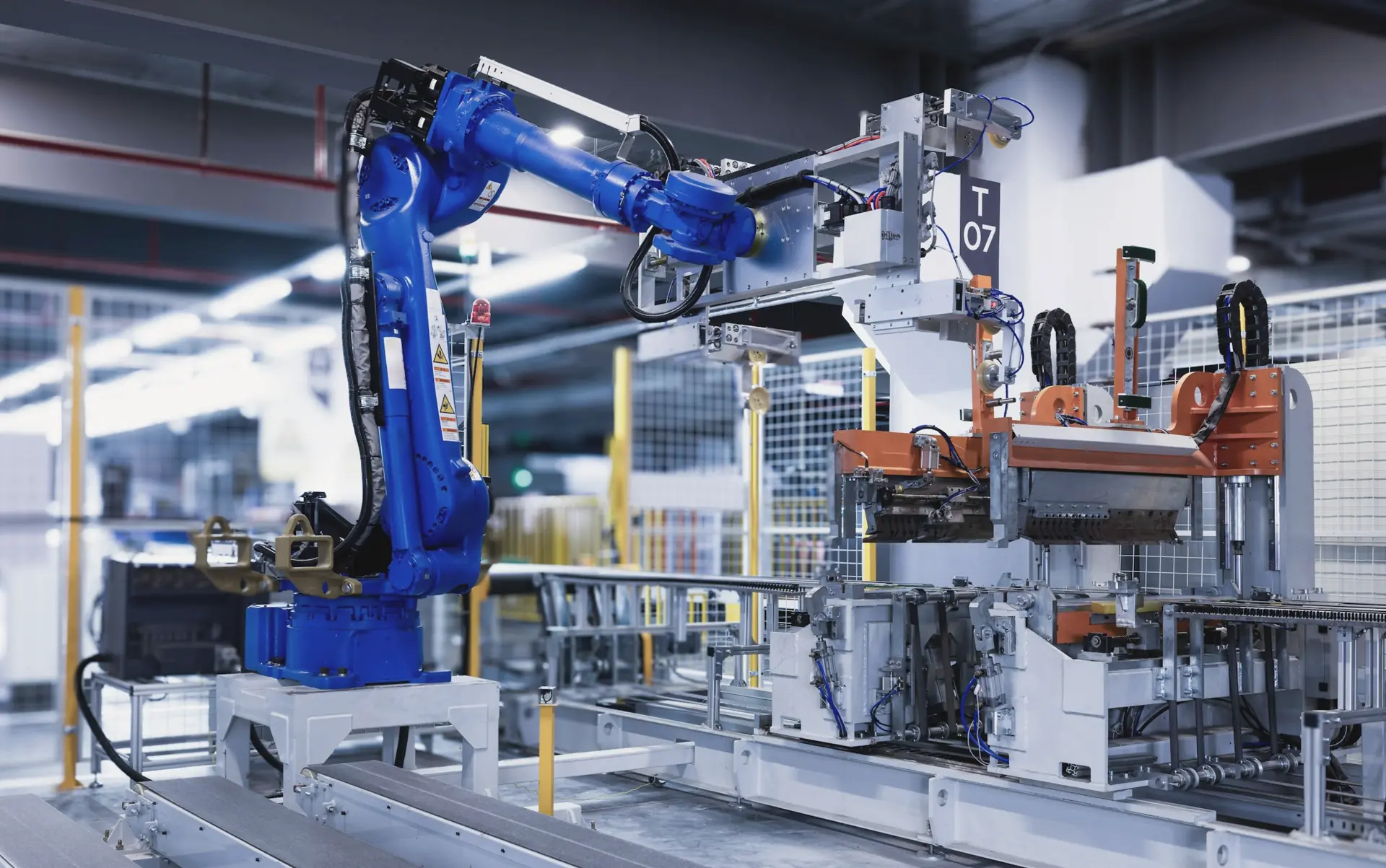
I start on the floor, not in a meeting room. Watching a real shift shows where information gets lost: the paper job sheet that's always a step behind, the spreadsheet that bridges two systems, the station with no way to record a problem.
From there, the goal is to capture information once, where the work happens, and send it everywhere it's needed. That might be a simple tablet at each station, handheld scanners, or a link between your machines and your ERP. Whatever the fix, it has to be quicker for operators than what they do today, or it won't stick.
Where a task is repetitive or error-prone, I automate it: counts, labels, and status updates that happen on their own, triggered by the equipment and devices already on the line.
I work with barcode and RFID scanners, label printers, and equipment connections regularly, so the software and hardware are planned together.
What the software can handle
Typical areas I build for. Most projects start with one or two of these and grow from there.
Release jobs to the floor, track progress by station, and spot late jobs before they become a problem.
Know what's on hand, what's set aside for jobs, and what needs reordering, without waiting for a stock count.
Trace any finished product back to the materials, machine, and shift that made it, in seconds instead of days.
Record inspections and holds right at the station, so problem parts are stopped and logged where they're found.
Connect scanners, RFID, scales, and label printers so information is captured as work happens, not typed in later.
Keep production, stock, and costs flowing into your business system automatically.
What it can look like
Examples of the kinds of screens and tools I build for this kind of work.
GET /api/v1/work-orders?status=released 200 · 38ms
POST /api/v1/work-orders/WO-1182/operations 201 · 54ms
{
"operation": "assembly",
"station": "LINE-03",
"quantity": 24,
"lot": "L-2026-1027-A"
}
PUT /api/v1/lots/L-2026-1027-A/trace 200 · 21ms
200 idempotent replay detected → original result returned
›
How a project runs
Small, steady steps with something real to look at early, and you involved the whole way through.
Follow a few real jobs from order to shipping, noting every hand-off, re-entry, and delay.
Build the smallest useful version for one line or area, and let the operators shape it.
Expand across the floor and link it to your ERP, inventory, and reporting.
Let's talk about manufacturing
Tell me what’s getting in the way. I’ll give you an honest view of the options, even if the answer is a small fix.